Tender Case Studies: Why We Never Fabricate Evidence
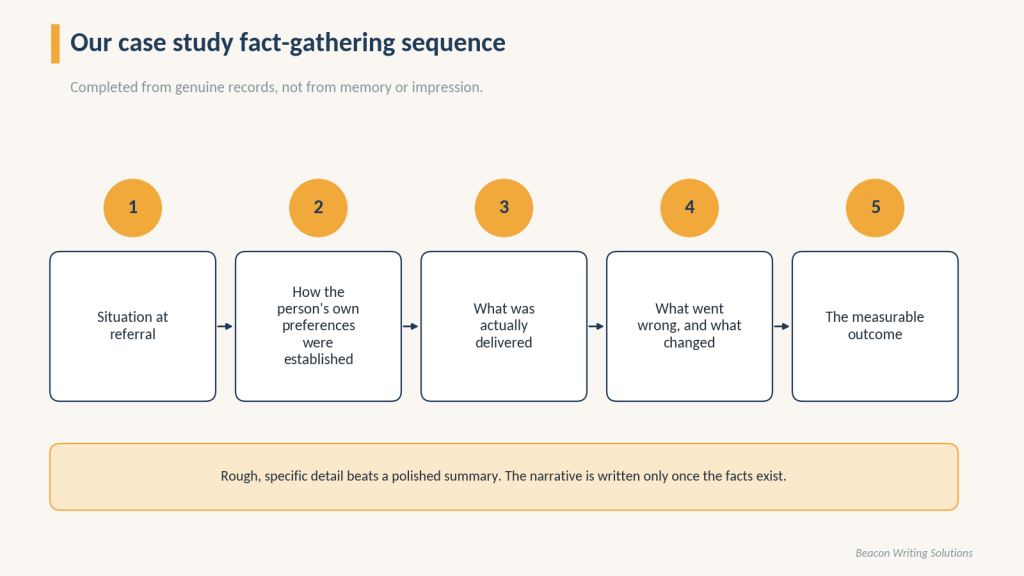
A fabricated case study is a legal risk in a public sector bid. Here’s the fact-gathering process we use instead, and what to do when the real evidence is thin.

A fabricated case study is a legal risk in a public sector bid. Here’s the fact-gathering process we use instead, and what to do when the real evidence is thin.
Key takeaways
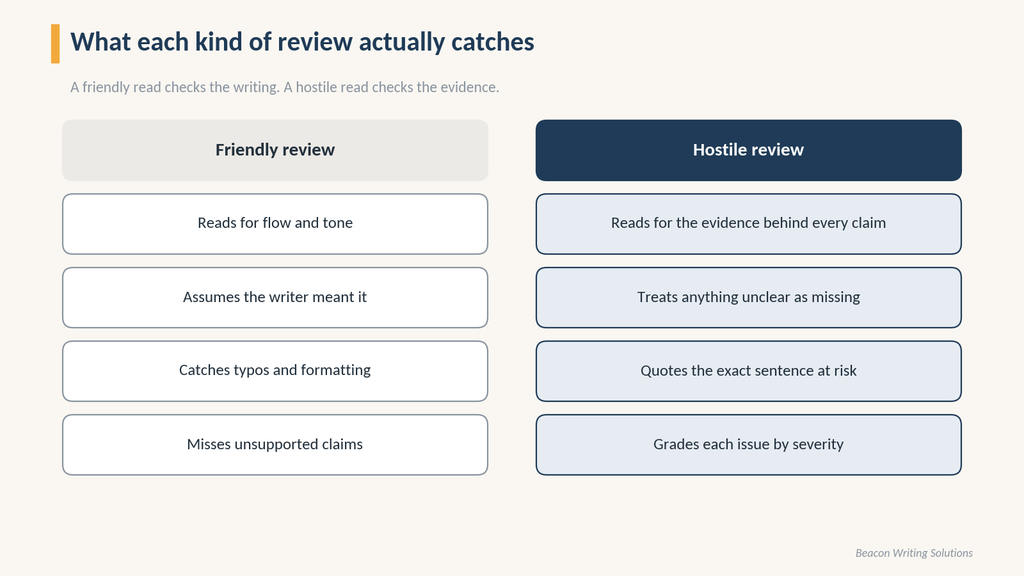
A friendly proofread catches typos. It does not catch unsupported claims or missing process detail, the things that actually lose marks.
A hostile review reads every claim asking “could we prove this today,” and every process asking who, how often, and what happens when it fails.
Issues get tagged Critical, Major, or Minor, so fixes are prioritised by actual risk, not by what’s easiest to change.

Winning NHS and council care tenders as a new provider without company references is challenging but achievable.

Step 1: Decode the Question Requirements Step 2: Use the STAR Method for Quality Questions Step 3: Demonstrate Compliance Without Sounding Robotic

Completing a PQQ effectively requires demonstrating your financial stability, relevant experience, and compliance credentials in a clear, evidence-based format that positions you to progress to the invitation to tender (ITT) stage

Successfully winning care contracts demands more than delivering quality services. It requires understanding procurement law, meeting strict compliance requirements, and submitting error-free bids that demonstrate clear value.